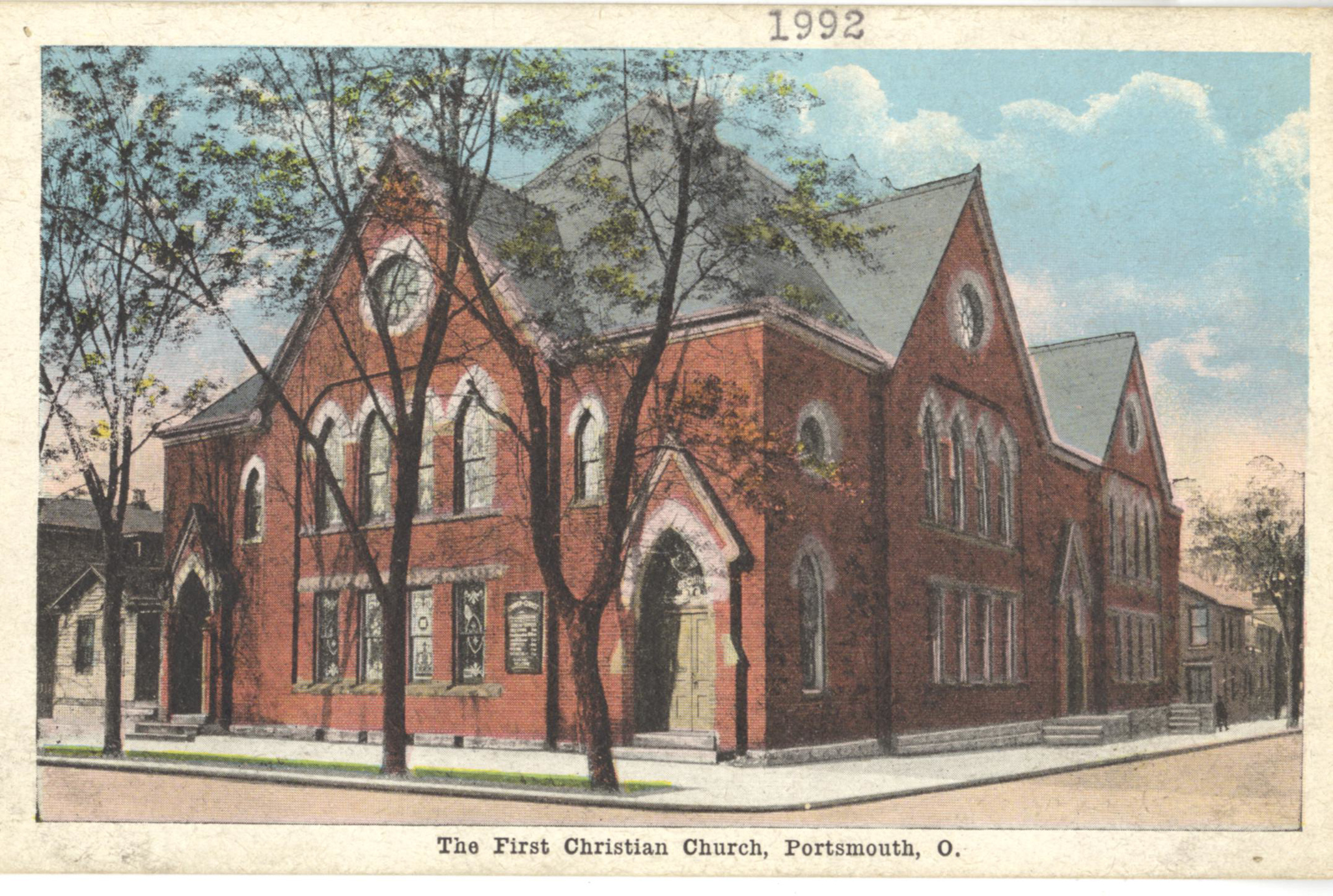
Colorized photo image of the First Christian Church at Third (3rd) and Gay Streets. The church was organized in 1853 and located on Chillicothe Street. This building was constructed in 1895 and expanded in 1906. The congregation was also known as the Disciples of Christ or Church of Christ.
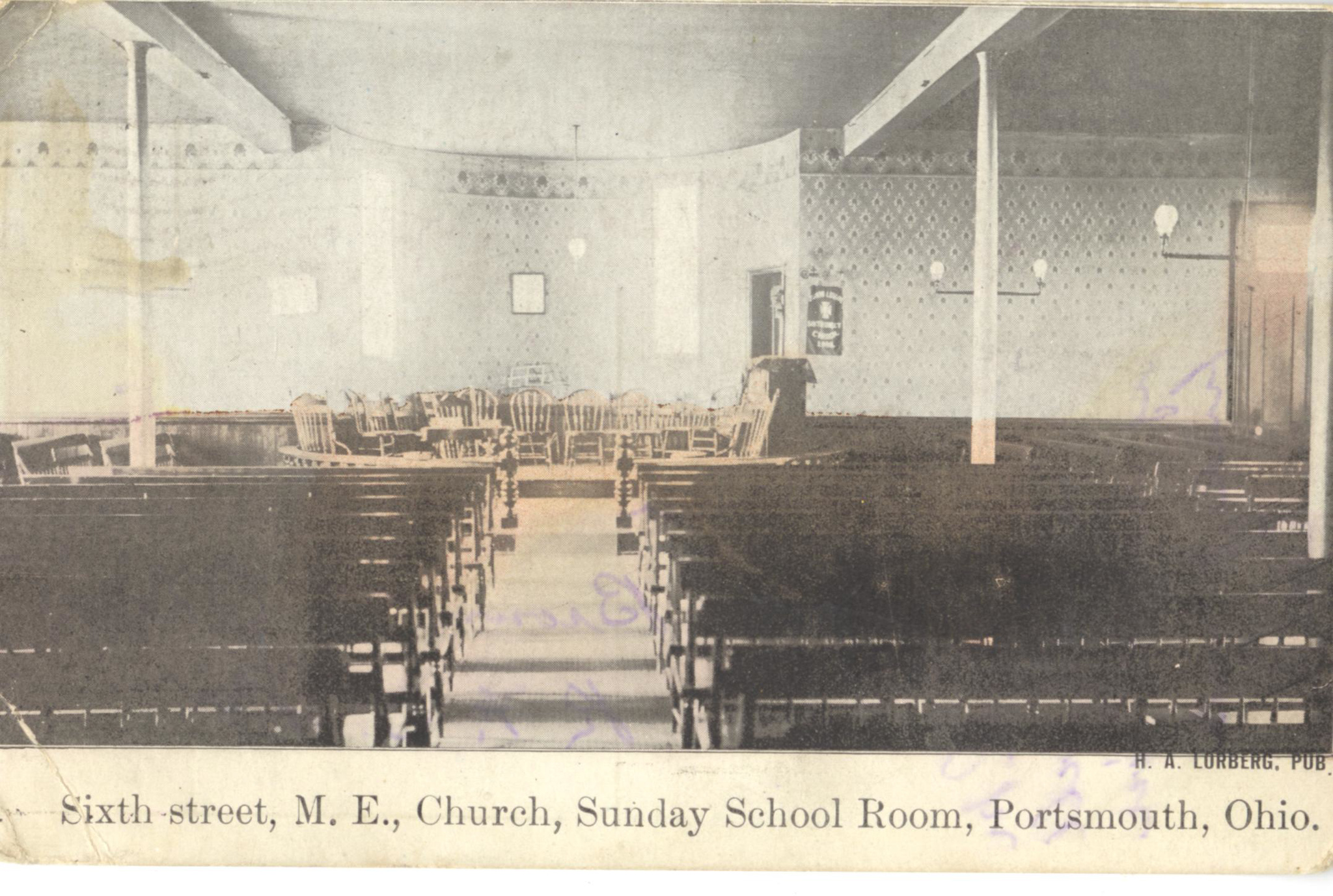
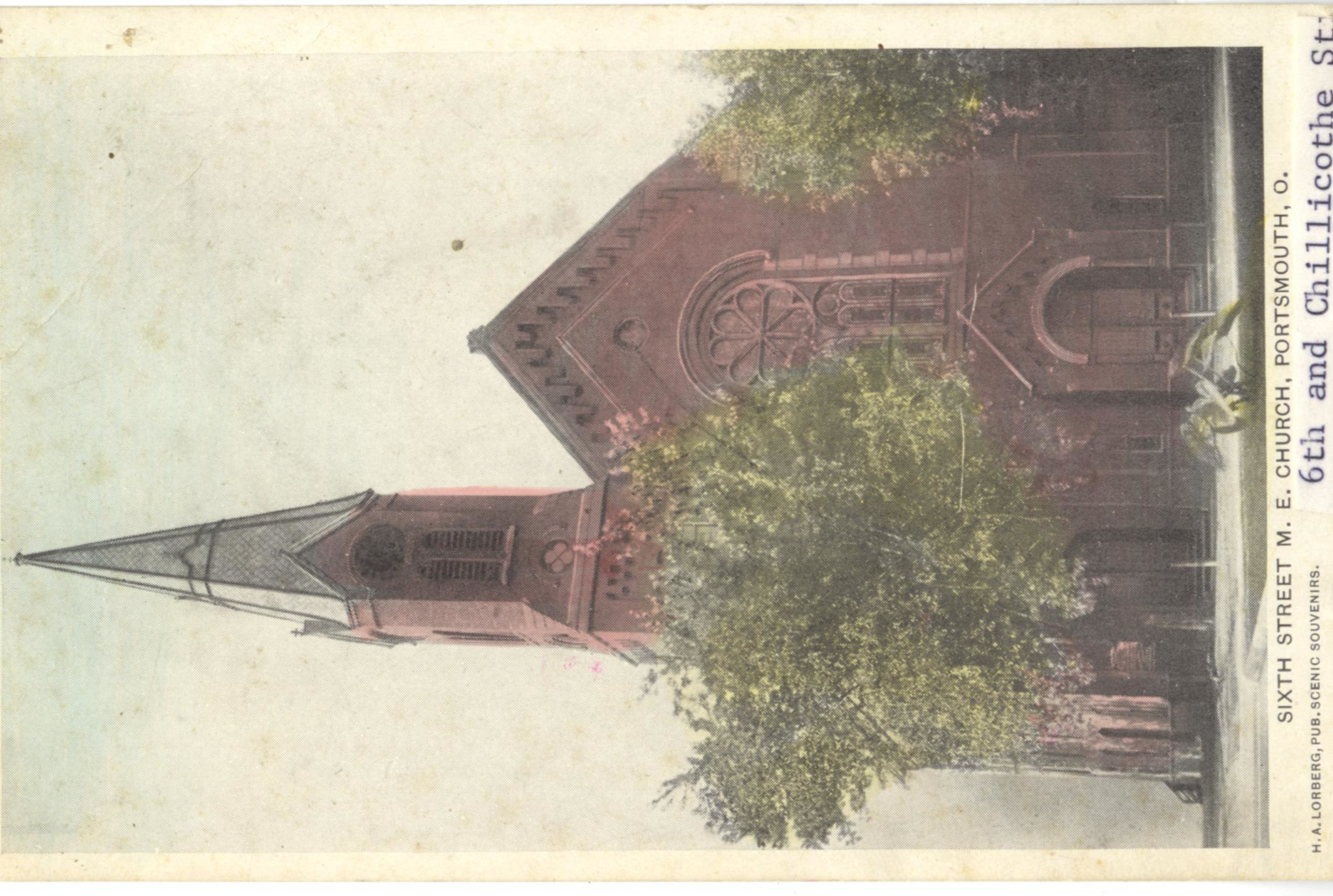
Colorized image of the Sunday School room inside the M.E. Church at Sixth (6th) and Chillicothe Streets. After being used by several different businesses, this building was razed for the construction of the third Masonic Temple in Portsmouth in 1927.
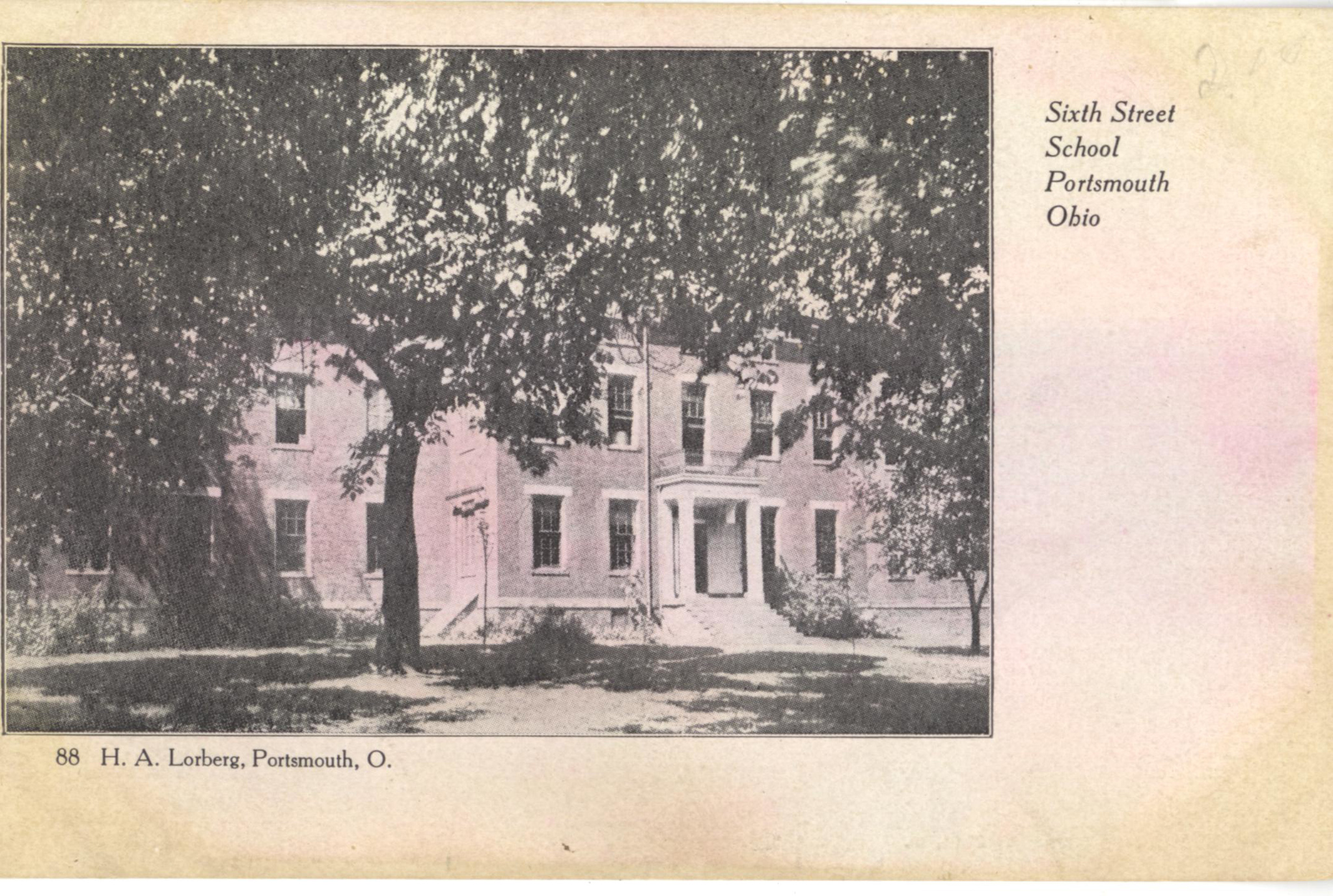
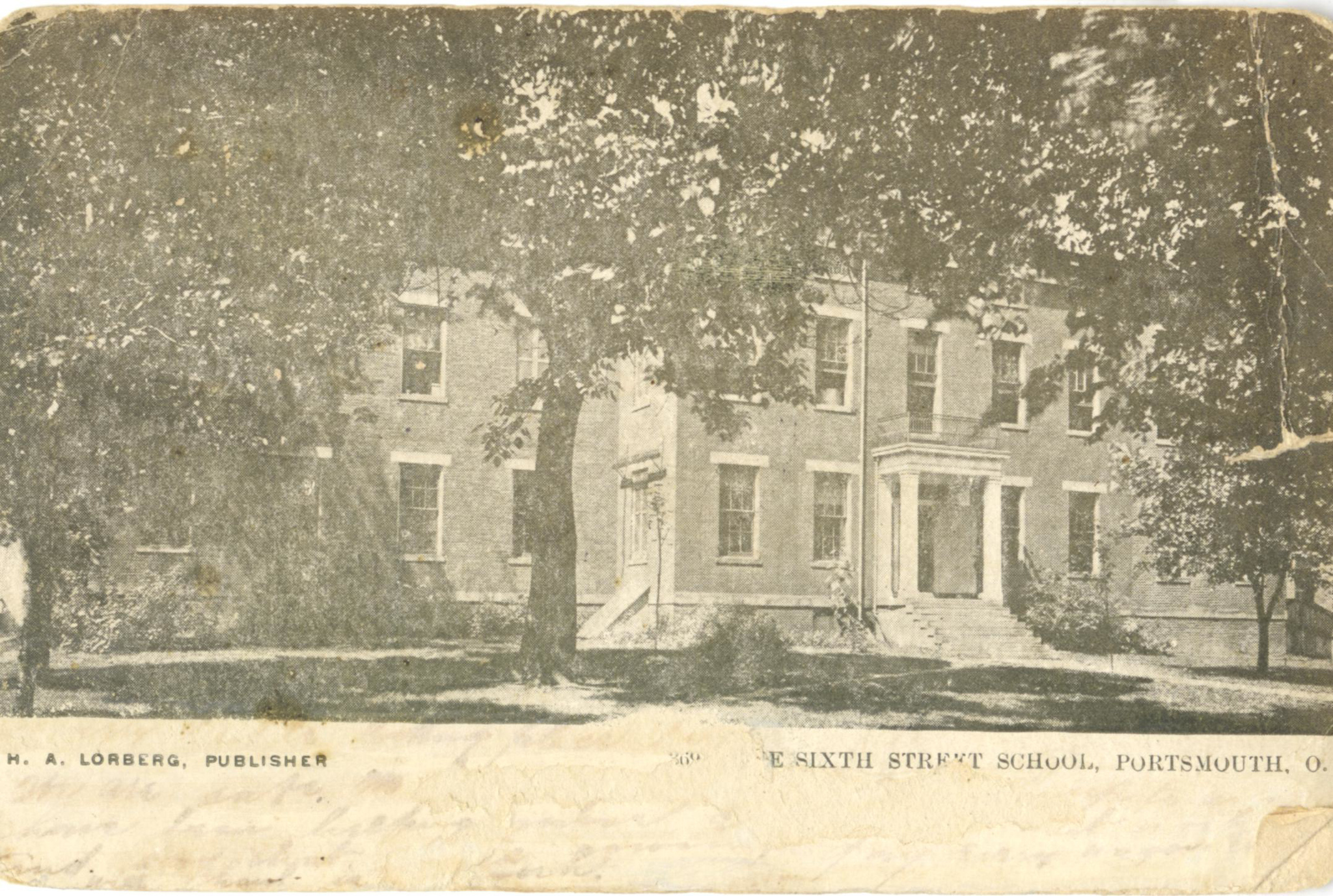
Black and white photo image with a slight tint to the school building. On July 15, 1867 the former home of Judge William Salter was deeded to the school board for a home on 6th Street for the superintendent. By January of 1868 it was remodeled into class rooms. In June 1871 a new high school building was under construction.
Black and white photo image of the Sixth (6th) Street School. On July 15, 1867 the former home of Judge William Salter was deeded to the school board and used as a residence for the school superintendent. It was later remodeled as a school building and ready for classes by January of 1868. In June of 1871 the Board of Education began building a new high school.
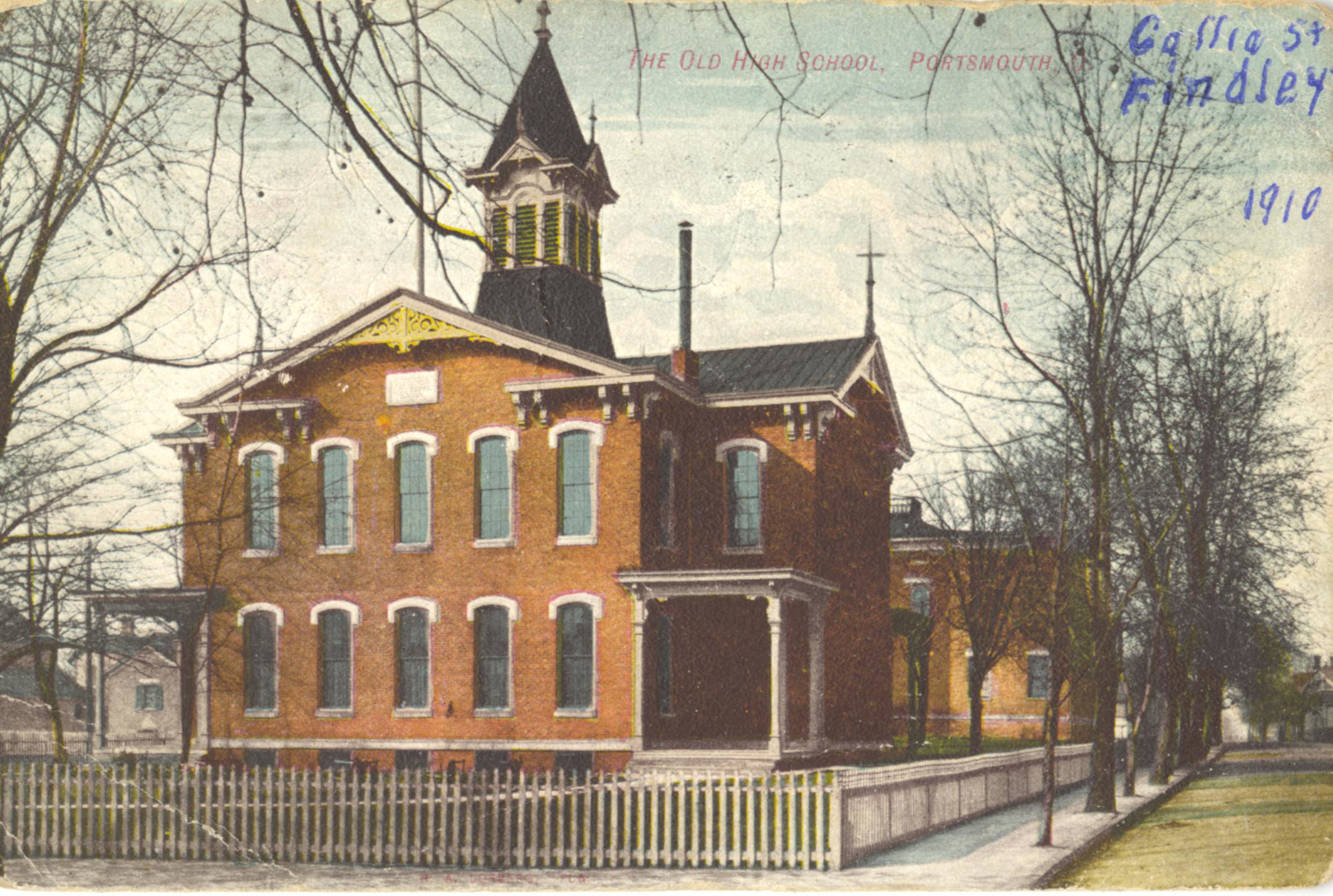
Colorized image of the Old Portsmouth High School at the corner of Gallia and Findlay Streets. It was built in 1871 and used for about thirty years until the School Board sold it in 1903.
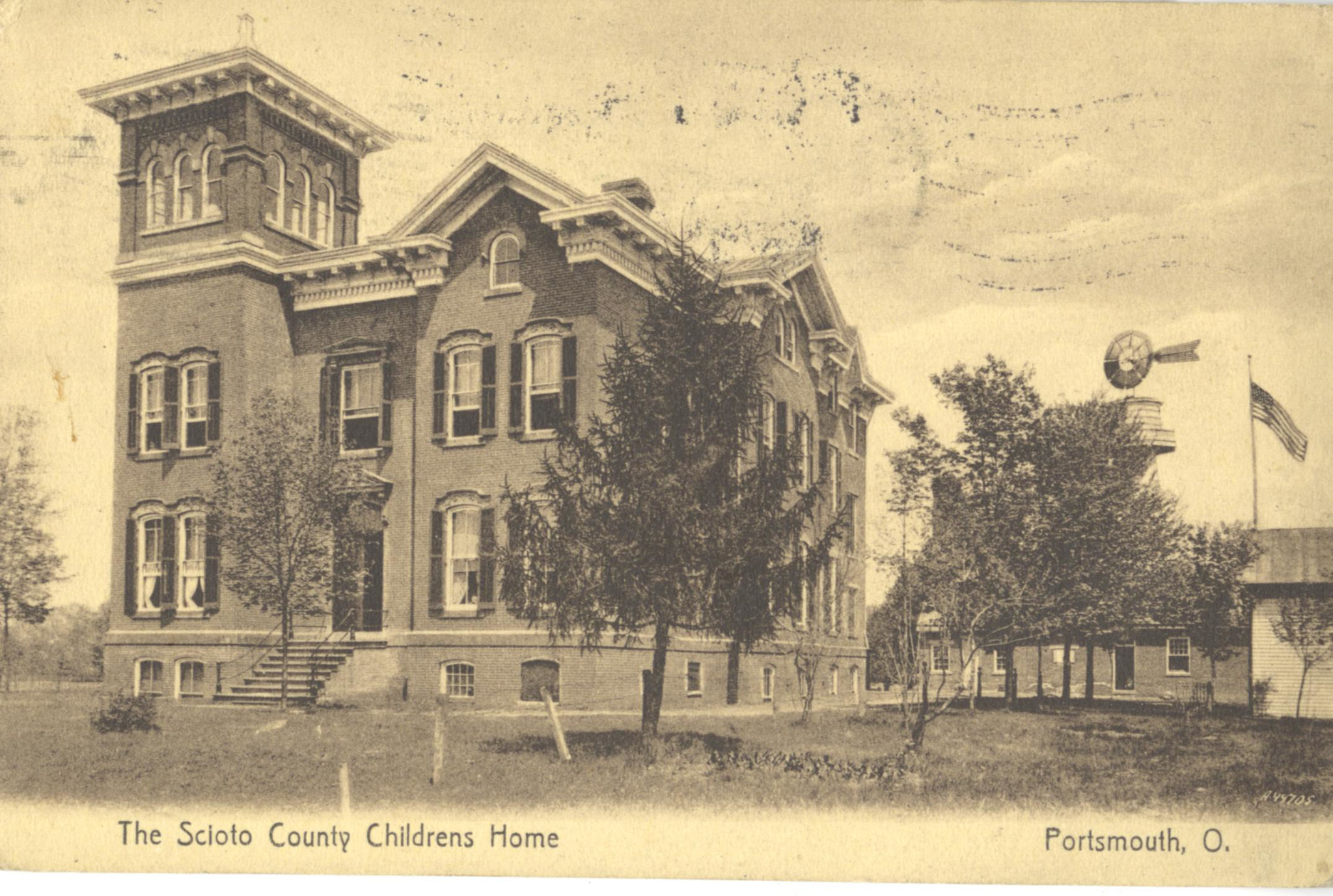
Black and white photo image of the children's home built in 1876 on Grant Street property that now is part of Mound Park. It was closed in 1921 when Hillcrest Children's Home opened in Wheelersburg.
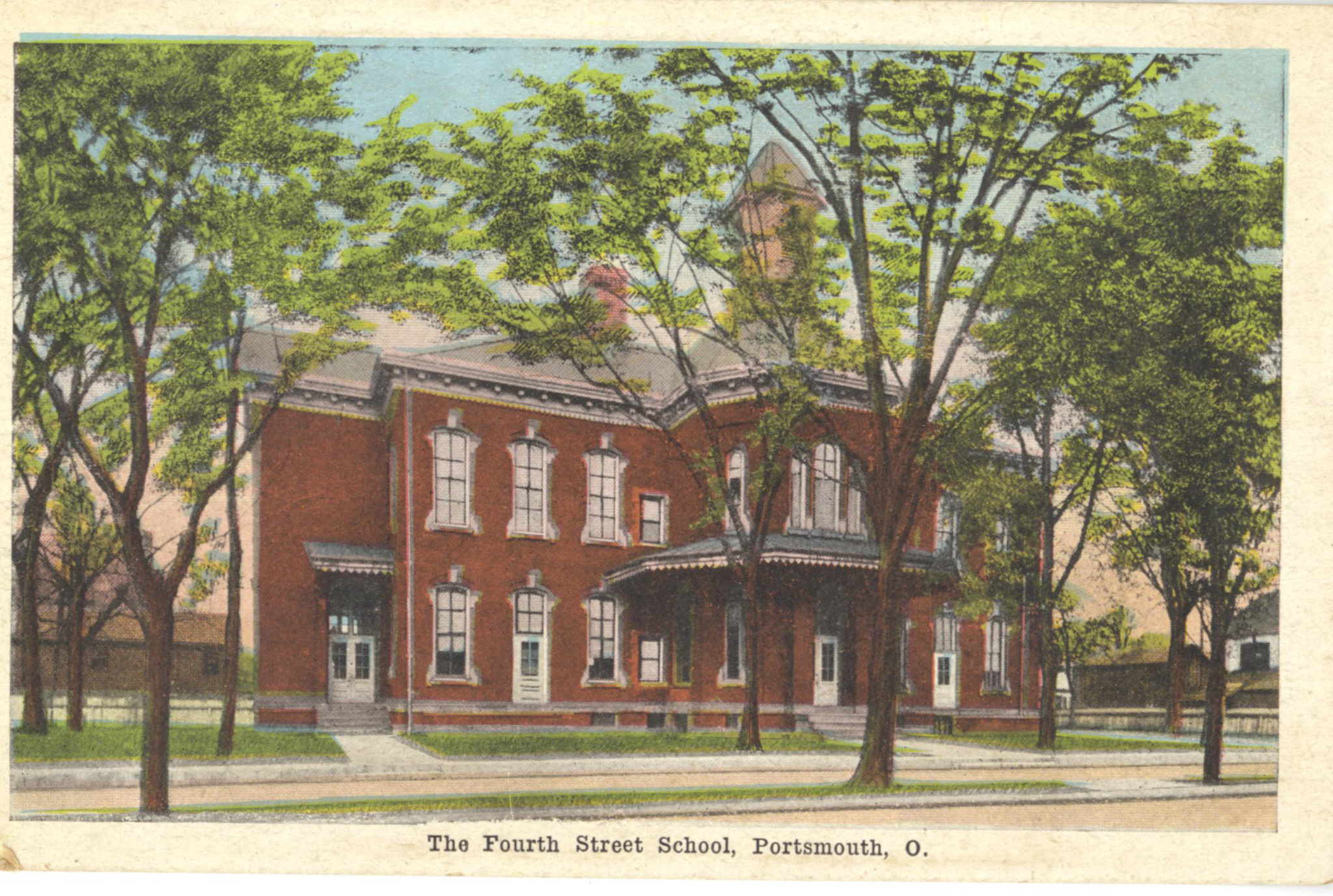
Colorized photo image of the Fourth (4th) Street School building at the northwest corner of Fourth (4th) and Court Streets. The ten room building was built in 1838. In 1930, this school was replaced the George D. Scudder School.
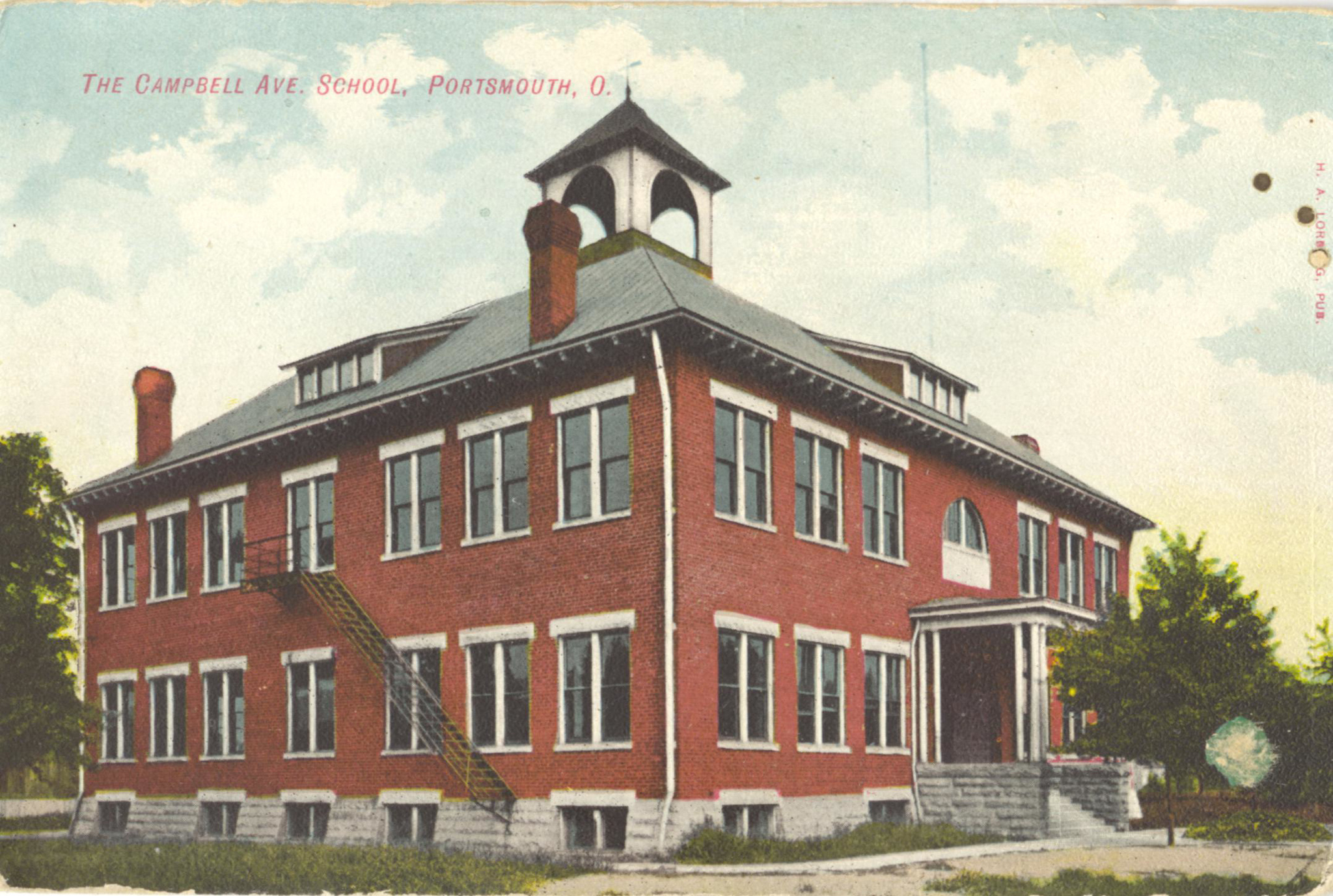
Colorized photo image of the Campbell Avenue School located between Sixth (6th) and Seventh (7th) Streets on Campbell Avenue. The original eight rooms were built in 1899 and four rooms were added in 1909. The 24 room Woodrow Wilson School was built on the site in 1927.
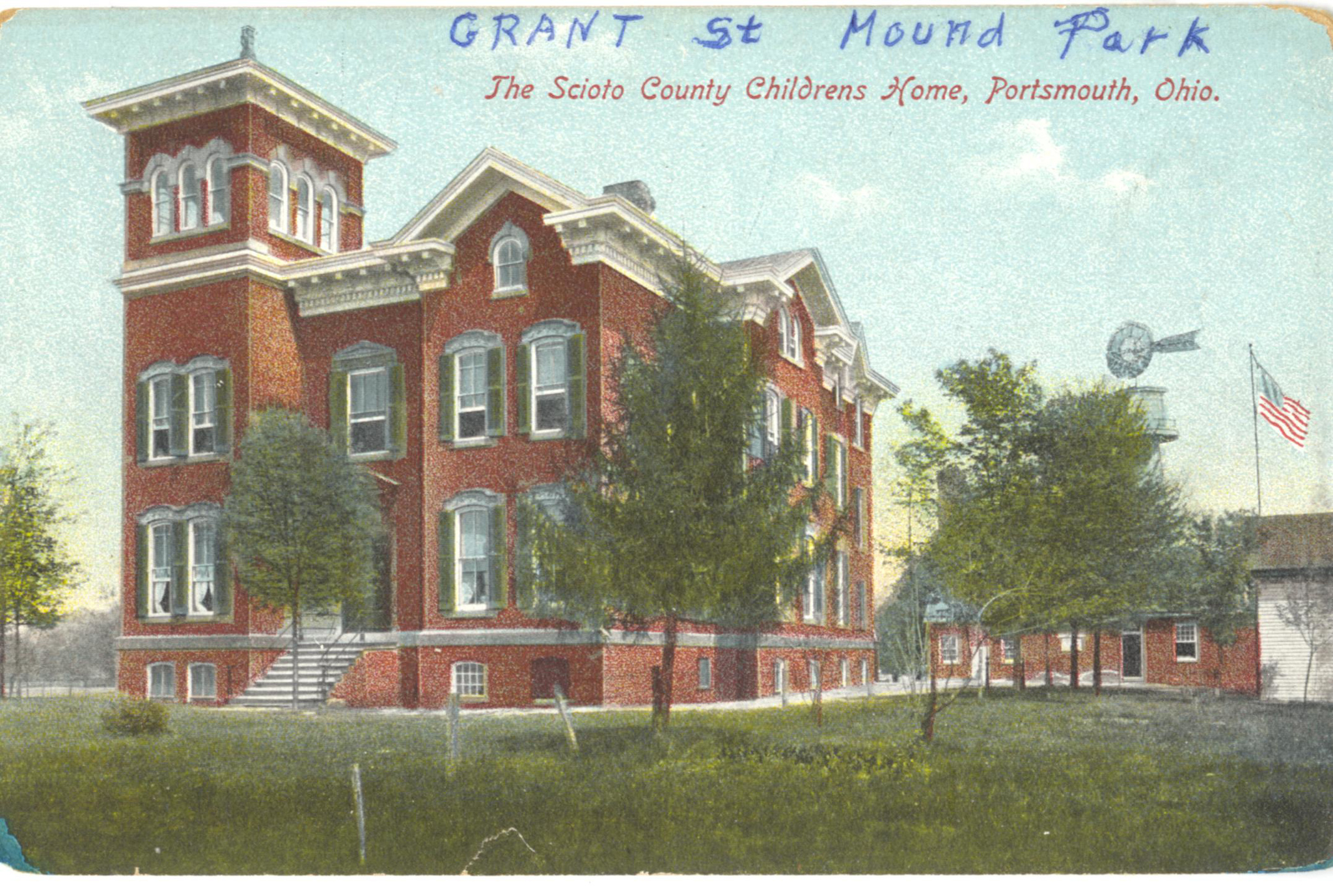
Colorized photo image of the county children's home, built in 1876 on Grant Street property that now is part of Mound Park. It closed in 1921 when Hillcrest Children's Home opened in Wheelersburg.